Nine Lives Lost in the BR 251 Highway Tragedy in
An Ordinary Journey That Never Reached Its Destination
For the passengers traveling north through Minas Gerais on the night of May 13, 2025, the journey was supposed to end somewhere familiar. Their van had left the Triângulo Mineiro region and was heading toward Ceará, a northeastern state where relatives, neighbors, and ordinary routines awaited. Some passengers were returning to communities they knew well. Others were traveling between places separated by a vast distance, following one of the long road routes that connect Brazil’s interior with the Northeast.
There is a particular kind of anticipation attached to a long trip home. It grows as the kilometers pass and each hour brings a traveler closer to the people and places that matter. A familiar street, the smell of a family meal, a conversation postponed until the next visit—these are small things, but they can make a tiring ride worthwhile. Whatever plans the passengers had made, none could have expected that the journey would end in catastrophe on a highway in northern Minas Gerais.
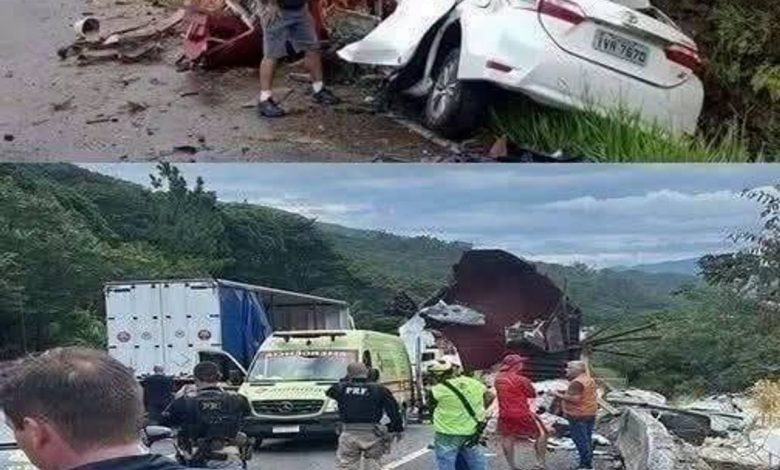
At approximately 9:30 p.m., near the community of Barrocão in the municipality of Grão Mogol, the van collided head-on with a large truck on federal highway BR-251. The crash killed nine occupants of the van, including eight adults and a four-year-old boy. Ten people were injured: eight from the van and two from the truck, according to contemporary reports from emergency authorities. The truck occupants sustained minor injuries, while some of the people rescued from the van were in serious condition.
These numbers describe the scale of the incident, but they do not describe the lives interrupted by it. Nine people were not simply absent from a passenger list. Nine sets of relationships, responsibilities, memories, and possibilities were abruptly cut short. The injured faced their own difficult uncertainty, with hospital treatment and, for some, a long road toward physical and emotional recovery.
The tragedy also raised questions that reach far beyond one night and one stretch of road. Investigators examined how the vehicles came to collide. Reporting indicated that the truck had entered the opposite lane, and transport regulators confirmed that the van lacked authorization for interstate passenger transport. Taken together, those details turned a devastating collision into a wider public discussion about road design, commercial transport oversight, and what safety means for people whose lives depend on long-distance travel.
To understand why the accident mattered so deeply, it helps to look beyond the wreckage—to the geography of the route, the people traveling it, the emergency response, the families waiting for news, and the systems intended to prevent such a disaster.
A Highway That Connects Distant Worlds
Brazil is a country of extraordinary distances. For many families, work, education, medical care, and loved ones may be separated by hundreds or even thousands of kilometers. Road transportation therefore serves more than a practical purpose. It is an essential connection between regions, communities, and opportunities that would otherwise feel impossibly far apart.
BR-251 is part of that national road network. In northern Minas Gerais, the highway carries traffic through an important corridor used by passenger vehicles and commercial trucks. Drivers may share the same roadway while traveling for very different reasons. A freight operator might be transporting goods or returning from a delivery. A family might be crossing several state borders to visit relatives. A van may carry people whose destinations are scattered among smaller towns rather than concentrated in a major urban center.
This mixture of vehicles creates a complicated environment. Heavy trucks require more room to maneuver and more distance to stop. Smaller passenger vehicles have less mass and can suffer severe damage in a head-on collision with a truck. On roads where opposing lanes are not separated by a physical barrier, an unexpected movement across the center line can become deadly within moments.
The location near Grão Mogol also matters. This is not a short urban commute with medical assistance always only a few blocks away. A nighttime collision outside a large city can require emergency teams to travel considerable distances, coordinate among multiple jurisdictions, and work in terrain that complicates access to the vehicles. Those challenges do not diminish the commitment of responders, but they can make every rescue more demanding.
It is tempting to describe a highway as dangerous solely because a terrible crash occurred there. A more useful approach is to ask which risks are persistent and which can be reduced. Road width, visibility, lane separation, surface conditions, speed management, vehicle maintenance, driver alertness, and effective enforcement all influence the likelihood and severity of a crash. None should be assumed to have caused this particular incident without evidence. Yet all are relevant to the broader question of protecting future travelers.
Transport routes are sometimes discussed primarily in economic language: freight efficiency, travel time, connectivity, and regional development. Those considerations are important, but the May 2025 tragedy is a reminder that the ultimate measure of a transport system must include the safety of the people who use it. A road can move goods efficiently and still fail to provide adequate protection against foreseeable human errors.
For residents who regularly travel between Minas Gerais and the Northeast, the events at Barrocão gave that concern a painfully concrete form. The highway was not an abstraction. It was the route people took to return home.
What Happened on Tuesday Night
Reports released in the immediate aftermath place the collision around 9:30 p.m. on Tuesday, May 13, 2025. The van had departed from the Triângulo Mineiro and was headed toward Ceará. The truck was traveling in the opposite direction, from the Northeast toward southern Brazil. Accounts from Brazilian news outlets, citing emergency services, locate the accident near kilometer 446 of BR-251, close to Barrocão; some early coverage used a nearby kilometer reference.
According to information released by the Civil Police of Minas Gerais, preliminary evidence indicated that the truck entered the lane used by oncoming traffic and struck the van. The force of the collision pushed the vehicles off the roadway and into an area that proved difficult for emergency personnel to reach. Several occupants of the smaller vehicle became trapped in the twisted structure.
A head-on crash is particularly destructive because the vehicles are approaching one another. The closing speed can be high, and the energy released is concentrated in an extremely short moment. The structural differences between a passenger van and a large truck can compound the consequences. These are general principles of collision physics, not a reconstruction of the precise speeds or movements in this case; only a detailed investigation can establish those particulars.
The first reports were necessarily incomplete. During a major emergency, firefighters focus on saving people, medical teams assess injuries, police secure the site, and investigators begin preserving evidence. Information can change as patients are transferred and passenger counts are reconciled. That explains why early summaries of disasters sometimes differ in small but important ways.
What became clear was the terrible human toll. Nine people inside the van were pronounced dead. Eight other occupants were injured. The two people traveling in the truck also suffered injuries described in reports as minor. In the hours afterward, medical teams treated survivors while police and forensic specialists undertook the difficult task of identifying the deceased and establishing the circumstances of the crash.
For the public, the scene could be understood through photographs of badly damaged vehicles and the presence of rescuers. For investigators, however, the roadway held a more detailed record: tire marks, debris, points of contact, vehicle resting positions, and damage patterns. Those traces can help reconstruct what happened even when no single witness has seen every second of an incident.
The fact that a preliminary finding points toward one vehicle crossing the center line is important. But it does not answer every question about why that movement occurred. A full assessment must distinguish between an observed outcome and the causes that produced it. Was speed a factor? Were weather or road conditions relevant? Was there a mechanical failure, a medical event, distraction, or fatigue? Investigators were tasked with examining evidence rather than treating one possibility as a settled conclusion.
That distinction matters because accountability depends on accuracy. Families deserve a careful explanation rooted in facts, not speculation, and future prevention efforts depend on learning the right lessons.
Rescue Teams Confronted a Difficult Scene
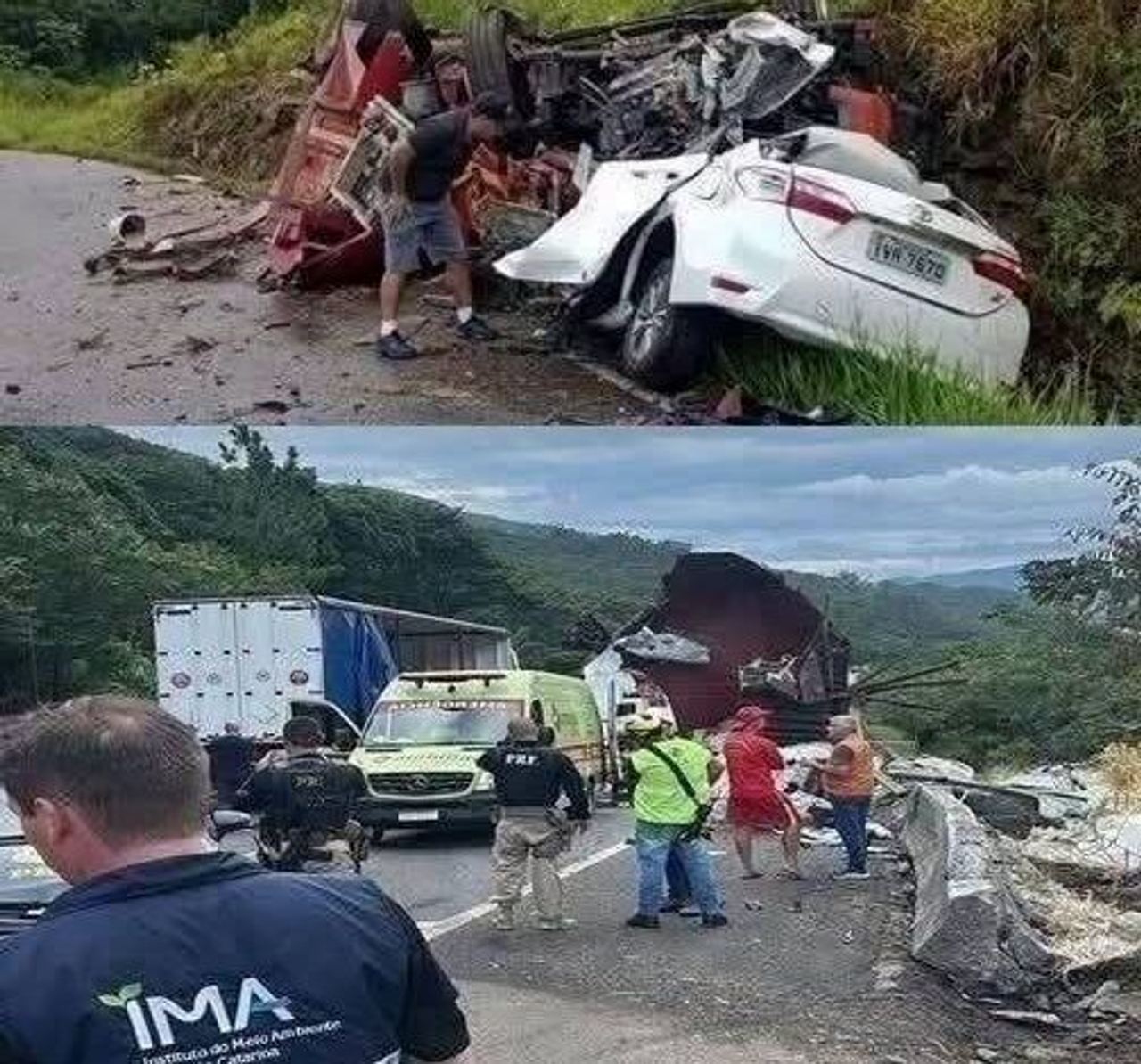
The immediate aftermath of the collision demanded a coordinated response. The Minas Gerais Fire Department, the Mobile Emergency Care Service known as SAMU, the Federal Highway Police, and the Civil Police were among the agencies involved. Reports from the time described firefighters arriving to find victims trapped in the damaged van and both vehicles off the road.
Rescuing occupants from severely damaged vehicles is delicate work. Responders must first assess hazards that could endanger passengers or rescuers, including unstable metal, leaking fluids, traffic nearby, and the possibility of further movement. They then determine how to create access without worsening existing injuries. Cutting or moving portions of a vehicle may be necessary, but such operations require careful coordination with medical personnel.
The circumstances of this crash made that work especially urgent. Some passengers had already lost their lives, while survivors needed rapid evaluation and transportation. Injuries associated with severe road collisions may include internal trauma that is not immediately visible, fractures, spinal injuries, and potentially dangerous bleeding. A person who can speak or move at the scene is not necessarily beyond danger.
Emergency reports indicated that 11 firefighters and four fire-service vehicles took part in the operation, while SAMU deployed six ambulances. The response also involved personnel from different nearby locations. Those details illustrate the resources required when multiple casualties must be treated at once and when access to a crash site is difficult.
Triage becomes a central challenge in such emergencies. Medical workers must rapidly assess who needs immediate intervention, who can be transported safely after stabilization, and how patients should be distributed among facilities capable of treating them. These decisions are made under pressure, often with limited information and urgent competing needs.
The BR-251 was closed for several hours as crews rescued victims, treated the injured, recovered the deceased, and secured the site. The disruption affected other travelers, but its purpose was essential. The roadway could not be treated as an ordinary traffic corridor while emergency operations and evidence collection continued.
To an outside observer, the response may appear as a series of dramatic images: ambulances, lights, equipment, and destroyed vehicles. Much of the most important work, however, happens in quieter acts of professional judgment. One responder holds a patient steady. Another communicates with a hospital. A firefighter checks whether a cut can be made safely. An officer records the location of debris before it is moved. A doctor prepares to receive someone whose condition may change during transport.
It is not necessary to invent heroic dialogue to recognize the gravity of that work. The documented scale of the response speaks for itself. It also reveals a larger truth about road safety: even a skilled emergency system cannot undo all the damage once a high-energy collision has occurred. Prevention must begin long before an ambulance is called.
The Difficult First Hours in the Hospitals
Survivors from the van were transported to health facilities in the region, including hospitals in Francisco Sá and Montes Claros. Contemporary reporting identified the Santa Casa de Montes Claros as one of the institutions caring for injured passengers. Some patients were stable when their conditions were reported, while others faced severe or critical injuries.
The words used in a medical bulletin can sound deceptively simple. Stable does not mean healthy, and serious does not mean hopeless. A patient’s condition can change as injuries become clearer, surgery begins, or complications emerge. Early statements describe a moment in an evolving clinical situation; they should not be mistaken for the eventual outcome.
For someone involved in a major collision, hospital admission may mark the start of a long process. Immediate treatment addresses threats to life: maintaining an airway, controlling bleeding, stabilizing fractures, and assessing damage to vital organs. Later care may include additional surgery, pain management, physiotherapy, occupational therapy, and psychological support. Every recovery follows its own pattern, and some people live with permanent changes.
Families facing an emergency of this kind must navigate a second crisis: uncertainty. It can take time to learn where a loved one has been taken, whether identification is complete, and who is authorized to provide updates. When relatives live in another state, the distance adds another burden. Travel arrangements, unfamiliar hospitals, documentation, and the costs of missing work can all complicate an already overwhelming situation.
In the May 2025 case, news coverage reported that a mother from Ceará survived the collision while her four-year-old son was among those killed. That one documented detail captures a grief no generalized account can adequately express. It also warns against treating the people involved as interchangeable figures in a casualty tally. Each passenger belonged to a particular family and community, and the consequences of the crash were profoundly unequal.
For injured survivors, grief may coexist with gratitude for being alive. They may mourn friends or relatives while undergoing their own treatment. They may struggle to reconstruct memories of the collision or to imagine traveling again. These experiences are common concerns after traumatic events, but it would be wrong to assign specific symptoms to any survivor without their own account or medical evidence.
The immediate medical response deserves recognition, yet the longer-term needs of survivors can receive less public attention after headlines fade. Rehabilitation may be expensive and time-consuming. A person unable to return quickly to work may face financial insecurity just as medical expenses and caregiving needs increase. Support must therefore extend beyond emergency surgery to include accessible follow-up care, information, and practical help for households whose lives have been disrupted.
The injured were not merely fortunate statistics. They were people confronting the possibility of an entirely different future, and their recovery mattered long after the wreckage had been cleared.
Families Waiting Across State Lines
One of the most painful features of a long-distance transport disaster is how far its effects travel. The collision occurred in Minas Gerais, but the van was heading toward Ceará, and the people aboard were connected to communities in several Brazilian states. Reporting on the deceased identified victims with ties to Ceará, Pernambuco, Paraíba, and Minas Gerais.
For relatives elsewhere, the first information often arrives indirectly: a news alert, a shared photograph, a message from another passenger’s family, or a phone call that begins with a question no one wants to hear. Even after a crash is confirmed, official identification and hospital updates can take time. Confusion is particularly painful when social media circulates incomplete names, incorrect casualty totals, or images stripped of context.
Authorities therefore carry responsibilities that are both administrative and deeply human. Identifying those who have died must be done accurately, and relatives should receive confirmed information through appropriate channels. Police in Minas Gerais reported that the nine deceased victims had been identified by May 15. That was a necessary step toward releasing the bodies and allowing families to make funeral arrangements.
Identification is often presented as a procedural milestone, but it carries enormous emotional weight. Before it, a family may be caught between fear and hope. After it, uncertainty gives way to finality. Official confirmation makes possible the rituals that communities use to mark a death, yet it also makes the loss undeniable.
The journeys that families then undertake can be exhausting. Some may need to travel to another city to complete documentation or accompany an injured relative. Others arrange transportation home for a loved one’s remains. Work obligations, childcare, and the availability of money do not disappear during mourning. Indeed, the practical demands of a sudden death can arrive precisely when relatives have the least strength to meet them.
Community support is therefore more than symbolic. Accurate information, transportation assistance, food, temporary lodging, legal guidance, and help navigating public services can make a real difference. People who wish to help can also respect privacy, avoid circulating graphic images, and refuse to repeat rumors about the victims.
There is a human temptation, especially online, to turn a tragedy into a dramatic narrative built around a famous name or an emotionally perfect final message. Yet unverified details can distort the lives of the people who actually died. The public record of this collision confirms the loss of eight adults and a young child; it does not substantiate the original claim that a celebrated regional singer was among the victims. The true story is already devastating without embellishment.
For the families, what mattered was not whether the victims were widely known. It was that each person was known and loved somewhere. That is enough to make the loss worthy of attention.
The Child Whose Life Was Cut Short
Among the nine fatalities was a four-year-old boy. His age became one of the most heartbreaking facts in accounts of the accident because it made the scale of the loss impossible to discuss only in terms of traffic systems or legal procedures. A child that young should have years of learning, play, relationships, and possibility ahead of him. Instead, those possibilities ended on a nighttime journey.
Reports identified the boy’s mother as a young woman from Brejo Santo, Ceará, who was injured in the collision. Some coverage described her as pregnant at the time. The verified core of the story is painful enough: a family was divided by an event that occurred during travel, and the mother survived while her son did not.
Responsible reporting requires restraint here. The public does not need imagined accounts of the child’s final moments, invented family conversations, or detailed speculation about the mother’s emotional state. Those additions may appear moving, but they cross the line between recognizing suffering and appropriating it for a narrative.
What can be said is that children are exceptionally vulnerable in severe road crashes, and protecting them requires more than relying on a driver’s skill. Appropriate restraints, correct seating arrangements, safe transport operators, vehicle condition, road infrastructure, and other layers of protection work together to reduce risk. Without an official finding about this child’s seating or restraint use, none of those issues should be presented as a proven cause in this case.
The presence of a child among the victims also broadens the conversation about passenger safety. The people who arrange and operate long-distance transport make decisions that affect travelers who may have little ability to evaluate vehicle maintenance, licensing, driver schedules, or crashworthiness. A young passenger is particularly dependent on the adults and institutions responsible for those choices.
For public policy, this creates a clear duty to make safety standards meaningful rather than merely formal. Rules must be understandable, enforceable, and practical for the communities they are meant to protect. Families should not have to become experts in transport regulation to have a reasonable expectation of reaching their destination alive.
The young boy’s life should not be reduced to a symbol. He was an individual, and his family deserves privacy and dignity. Nevertheless, remembering that a child was among those killed makes it harder to accept the idea that preventable road deaths are simply the unavoidable cost of mobility.
Investigators Search for a Clear Explanation
After the emergency phase, the responsibility for determining what happened shifted increasingly toward investigators and forensic personnel. The Civil Police of Minas Gerais opened an inquiry and gathered evidence about the circumstances of the collision. Investigators examined the vehicles and the scene, and officials said they would consider forensic reports and witness or survivor statements.
The location and shape of marks on the pavement can be particularly useful in reconstructing collisions. Tire traces may show braking or lateral movement. Damage patterns can help indicate the direction and severity of impact. Debris distribution and the final positions of vehicles may offer information about the collision sequence. None of these clues should be interpreted in isolation, because emergency activity and post-impact movements can complicate a scene.
Police reported preliminary indications that the truck crossed into oncoming traffic. That finding matters because roadway departure and lane invasion are among the mechanisms through which opposing-direction crashes occur. But the word preliminary must retain its meaning. Establishing that a truck entered another lane is not identical to establishing why its driver did so or which legal responsibilities may follow.
Speed is one possible investigative consideration. Higher speeds can reduce the time available to recognize a problem and increase the energy involved in a collision. Yet a news article cannot responsibly assign an exact speed without an official reconstruction. The same caution applies to fatigue. Driver exhaustion can affect perception, attention, and reaction time, but evidence that it caused a particular crash must be evaluated rather than presumed.
Environmental conditions may also deserve examination. Some Brazilian reporting mentioned a wet road and mist during discussion of investigative possibilities. Such conditions can affect visibility and traction, but their precise contribution to this crash would require supporting evidence. A careful reconstruction considers how factors might interact without turning each one into an established cause.
Mechanical issues require a similar level of care. Brakes, steering, tires, lighting, and other systems may be inspected after a serious collision. The existence of an investigation into equipment does not prove the equipment was defective. Likewise, visible damage after an impact should not be confused with damage that existed before it.
A fair process protects everyone involved. It gives families the best available explanation, helps authorities determine whether any violations occurred, and allows transport agencies to consider preventive measures. It also avoids condemning an individual based solely on dramatic images or social-media speculation.
The strongest investigations are not satisfied with a single convenient story. They attempt to determine how a chain of circumstances developed and where it might have been interrupted. In that sense, the inquiry serves both justice and prevention.
The Troubling Question of Transport Authorization
A significant detail emerged in reporting after the collision: Brazil’s National Land Transport Agency, ANTT, confirmed that the van did not hold the required registration or authorization for interstate passenger transportation. This fact expanded public concern beyond the immediate mechanics of the crash and toward the oversight of services operating across state borders.
Authorization is not a guarantee that a vehicle will never be i…
Read more stories
- Reba McEntire is enjoying the sweetest season of her life.
She calls Rex Linn the love of
- Parents Kicked Their Son Out of the House Because He Took $200 from His Stepfather – 10 Years Later, He Showed up at Their Anniversary Party and Made Everyone Go Silent
- My Husband and I Returned to Our Honeymoon Hotel 40 Years Later The Receptionist Looked at Him and Said Welcome Back!
- I had been retired for less than two days when my daughter-in-law called my new lakeside cabin the perfect solution for her parents’ summer plans.