I didn’t learn the young man’s name that night.
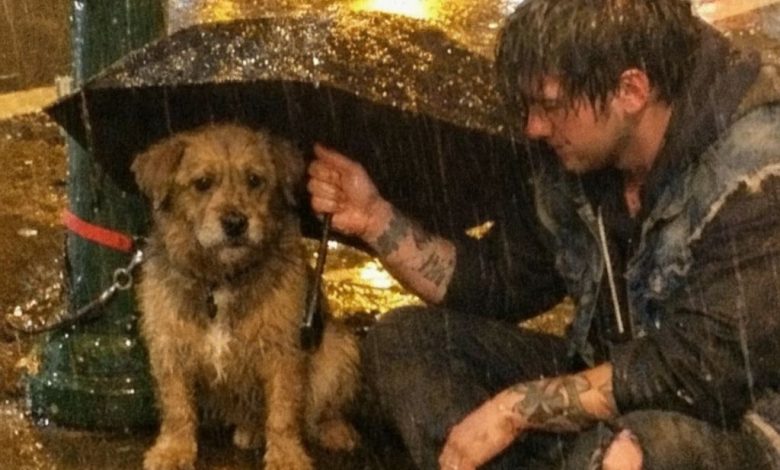
He shook his head when I asked, as if it wasn’t important, as if names were things you only needed when you planned to stay. He backed away politely, gave Barnaby one last scratch behind the ear, and disappeared into the rain before I could stop him.
For a long time, I just sat there on the curb, holding my dog, clutching a gallon-sized plastic bag filled with the artifacts of a life that had ended between one coffee receipt and a heartbeat.
I drove home slowly.
The house was exactly as we had left it that morning. David’s shoes by the door. His jacket still slung over the chair. The faint smell of his shampoo lingering in the hallway. Barnaby walked through the rooms, nose to the ground, checking every corner, every space where David should have been.
He stopped by the door.
He waited.
That was the moment I finally screamed.
Not in the hospital. Not when the doctor said the word fatal. Not when I signed my name beneath the phrase personal effects released.
I screamed when Barnaby sat down, tail still, eyes fixed on the door, convinced his dad was five minutes late.
I slid down the wall and cried until my chest hurt.
The Next Morning
Grief doesn’t arrive all at once. It comes in waves, in mundane realizations.
I made one cup of coffee instead of two.
I reached for my phone to text David, then remembered.
I opened the pantry and saw the dog food—full. He had remembered.
Barnaby stayed close to me all day. Wherever I went, he followed. When I stopped, he leaned against my leg, grounding me to the present.
In the afternoon, I noticed something in the plastic bag I hadn’t seen before.
The blue nylon leash.
It was folded carefully, dry, tucked beneath the wallet.
I stared at it for a long time.
The nurse hadn’t lied. It had been there. Which meant the young man must have untied Barnaby… and then retied him. Put the leash back. Made sure everything stayed the way David had left it.
Like a promise.
Three Weeks Later
Life kept moving forward in the cruel way it always does. Cards stopped arriving. Casseroles disappeared from the freezer. The world went back to normal, even though mine never would.
One evening, I took Barnaby back to the coffee shop.
Same lamppost. Same green paint chipped at the base. I tied him there, went inside, and ordered a Vanilla Oat Latte.
When I came back out, Barnaby was sitting calmly.
And someone was standing nearby.
Same torn denim vest. Same piercings. Same wary posture.
He froze when he saw me.
“I just wanted to make sure someone didn’t leave another dog,” he said quickly, already stepping back. “I wasn’t—”
“It’s okay,” I interrupted. “I was hoping I’d see you.”
I held out a coffee.
“For you. Hot this time.”
He hesitated, then took it with both hands, like it might disappear if he wasn’t careful.
“I never got to say goodbye,” I told him. “But because of you… my dog didn’t think he was abandoned. And neither did I.”
He swallowed hard and nodded.
We sat on the curb. We didn’t talk much. We didn’t need to.
Before he left, I asked him one last question.
“Why did you stay?”
He shrugged, staring at the street.
“Because someone once stayed with me when they didn’t have to. And I figured… that’s how it works. You pass it on.”
What Remains
David is gone.
That will never stop hurting.
But love didn’t leave with him.
It stayed tied to a lamppost in the rain.
It stayed in the hands of a stranger holding an umbrella he didn’t need.
It stayed in a dog who waited, believing.
We think life is about big moments—weddings, careers, achievements.
But in the end, it’s smaller than that.
It’s about who stays.
Who waits.
Who chooses kindness when no one is watching.
David didn’t make it home.
But love did.
And sometimes, that has to be enough.