Justin Bieber Tested Positive What the Viral Headline Really Means
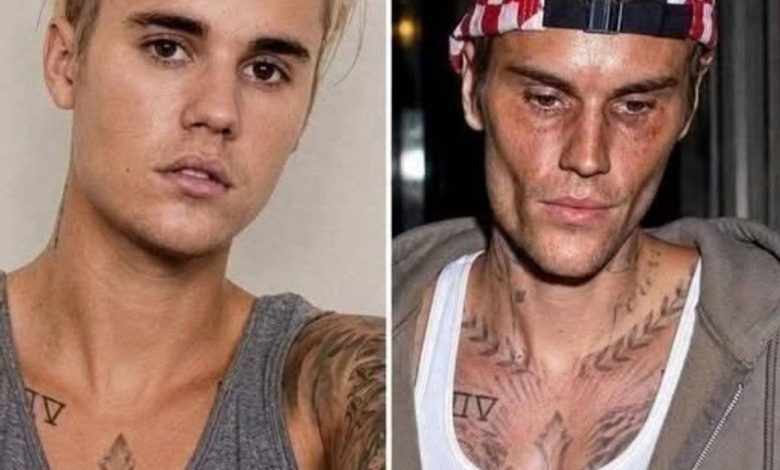
A headline claiming that Justin Bieber “tested positive for…” can immediately spark curiosity and concern, especially when it appears alongside photographs showing different stages of the singer’s life. But the wording raises an important question: positive for what, exactly? Without a clearly identified test, a date, and a reliable source, readers cannot determine whether the claim refers to a genuine health announcement, an older incident, or a misleading headline designed to attract clicks.
The screenshot presents an unfinished statement rather than enough information to establish what happened. It also contrasts an earlier photograph of Bieber with a more recent-looking image, encouraging readers to connect the headline with changes in his appearance. However, photographs alone cannot establish a diagnosis, confirm a test result, or explain why someone’s appearance has changed.
To understand the story responsibly, it is necessary to separate the wording of the headline from verifiable information, consider how celebrity rumors spread online, and recognize the limits of what can be concluded from an image.
The Historical Incident Behind the “Tested Positive” Headline
One important detail that helps explain the headline is Justin Bieber’s January 2014 arrest in Miami Beach. At the time, he was 19 years old, and the incident received extensive international media coverage.
According to contemporary reports published by TIME and the Los Angeles Times, a preliminary toxicology report following the arrest indicated that Bieber had tested positive for THC, the psychoactive component of marijuana, and alprazolam, a prescription medication commonly known by the brand name Xanax.
The toxicology results became part of a much larger news story involving the arrest and allegations surrounding the incident. However, the context is essential: these reports concerned an event from 2014, not proof of a new positive test in 2026.
The distinction between a historical report and a current announcement can easily disappear when old stories circulate online. A headline that omits a date may lead readers to assume the event happened recently, especially when it appears beside a newer photograph.
It is also important to describe the historical incident accurately. A reported toxicology result is not the same thing as a new diagnosis, and a positive test for a substance does not, by itself, establish every detail of a person’s behavior or circumstances.
Readers should therefore look for the publication date and the original reporting before deciding what a headline means.
Why the Words “Tested Positive” Attract So Much Attention
The phrase “tested positive” is powerful because it leaves a crucial detail unanswered. A positive result can relate to many different kinds of tests, including infectious diseases, screening examinations, or toxicology tests.
When a headline stops before naming the subject of the test, readers naturally want to complete the sentence.
This curiosity is a familiar feature of online publishing. Some headlines provide enough information to communicate the central news, while others deliberately withhold a key detail to encourage readers to open the article.
Celebrity names intensify this effect. Justin Bieber has been internationally famous since his teenage years, and developments involving his music, relationships, public appearances, and personal life frequently attract attention.
The result is an environment in which a vague headline can spread quickly, even when the underlying story is old or lacks important context.
This does not mean that every dramatic headline is false. It means that the headline alone is insufficient evidence.
A useful approach is to ask three questions:
- What exactly was the test for?
- When did the test take place?
- Which reliable source confirms the result?
If an article cannot answer these questions clearly, its central claim remains uncertain.
Separating Bieber’s Health History From Speculation
Bieber has also experienced publicly documented health challenges that are separate from the 2014 toxicology report.
In 2020, he discussed being diagnosed with Lyme disease. In February 2022, he tested positive for COVID-19, leading to changes in his performance schedule. Later that year, he announced that he had Ramsay Hunt syndrome, a condition that caused partial facial paralysis and forced him to postpone performances.
The Ramsay Hunt announcement received widespread attention because Bieber shared a video showing how the condition affected his facial movement. Medical explanations identify the syndrome as a complication of varicella-zoster virus reactivation, rather than evidence of a mysterious condition inferred from photographs.
These events illustrate why dates and context matter. Several unrelated events can become mixed together when social media posts compress years of personal history into a few dramatic sentences.
A report about COVID-19 in 2022, a diagnosis announced later that year, and a toxicology result from 2014 describe different circumstances. They should not be combined into a single story suggesting that a new test has taken place.
There is also no reliable basis for diagnosing a person’s current health condition from changes in their face, body, clothing, or expression. Lighting, camera angles, age, fatigue, and many other factors affect photographs.
When a new medical claim concerns a public figure, the strongest evidence is a direct statement, a reliable report citing identifiable sources, or a clear confirmation from an authorized representative—not speculation about appearance.
What About the “Before and Now” Photograph?
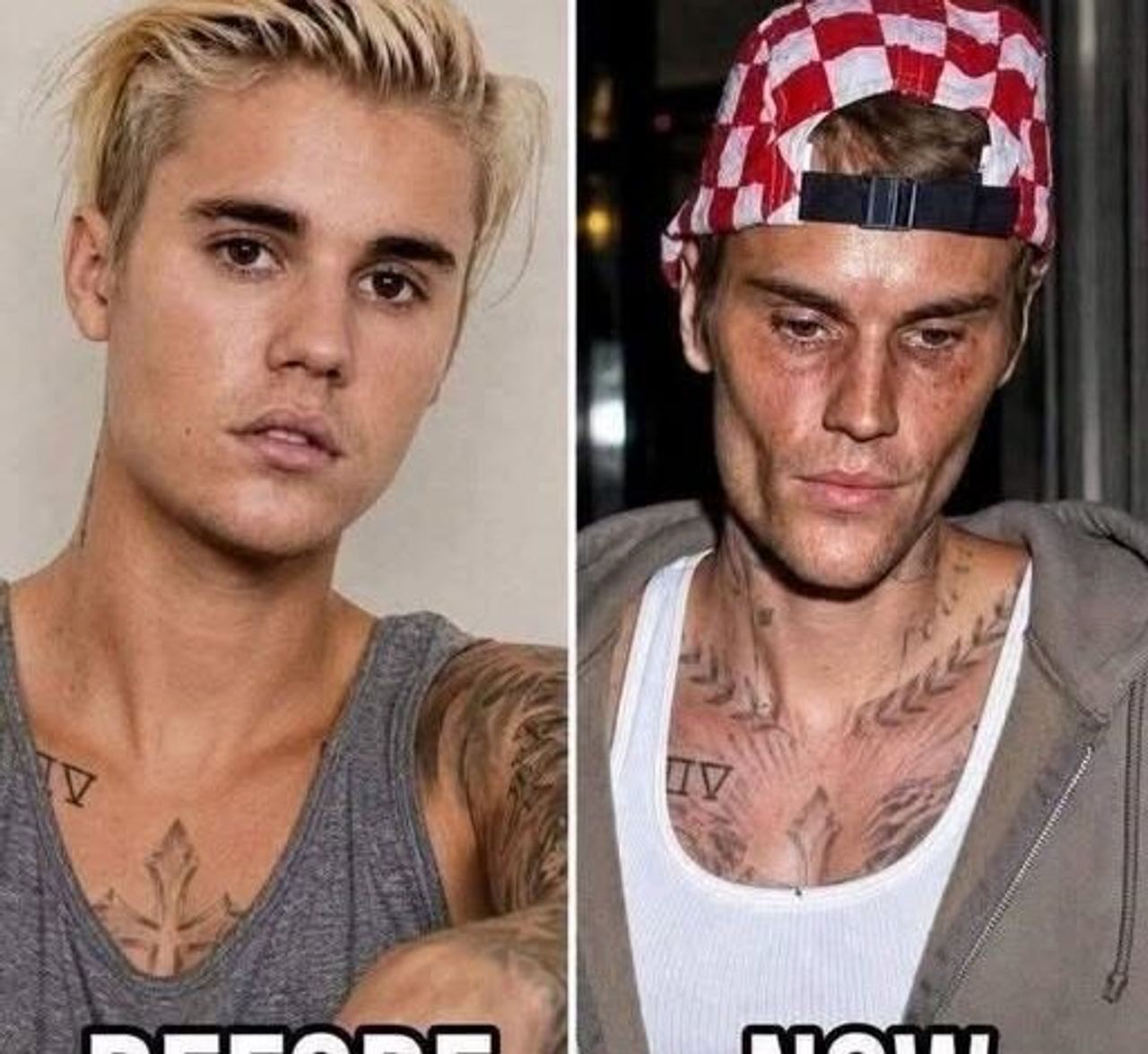
The image accompanying the headline places two photographs side by side and labels them “BEFORE” and “NOW.” This visual contrast encourages readers to compare Bieber’s appearance across different periods.
However, the layout does not establish when either photograph was taken or whether the images relate to the reported test.
A comparison can be visually striking without proving a medical or personal claim. People change as they age, and photographs taken in different lighting or settings can produce very different impressions.
The same principle applies to photographs of other celebrities. A tired expression does not establish an illness. A change in body weight does not identify its cause. An image taken outside a medical facility does not reveal why someone was there.
Readers should avoid treating such visual comparisons as diagnostic evidence.
It is reasonable to notice that two photographs look different. It is not reasonable to conclude that the difference proves a specific health condition or recent incident.
How to Check Celebrity Headlines Before Sharing Them
Before sharing a headline claiming that a celebrity has tested positive for something, take a moment to verify the information.
Check the date. An article published today may describe an event from many years ago. Look for the original publication date and the date of the incident itself.
Find the original source. Search for the interview, official statement, or reputable news report that first disclosed the information. Repeated copies of the same unsourced claim do not constitute independent confirmation.
Read beyond the headline. Make sure the article actually identifies the test, explains the circumstances, and provides evidence for its claims.
Be cautious with photographs. Ask whether the images are dated, correctly captioned, and directly connected to the event being discussed.
Distinguish facts from interpretation. A documented test result is one thing; speculation about what it means for someone’s health, behavior, or future is another.
These steps are useful not only for celebrity news but also for reports about health, public safety, and other subjects where misleading information can cause unnecessary concern.
What Readers Should Take Away From This Story
The headline “Justin Bieber admits that he tested positive for…” leaves out the information readers need most. Historical reporting does document a positive toxicology result involving THC and alprazolam following Bieber’s 2014 arrest. He also publicly disclosed separate health events in 2022.
But those older events should not be presented as proof of a newly confirmed positive test.
The screenshot alone does not establish a new diagnosis or identify a current test result. Without a reliable source confirming the specific claim, readers should avoid assuming that the headline describes breaking news.
Bieber’s long career has placed his public and private life under intense scrutiny. That attention makes accuracy especially important: a dramatic headline can reach millions of people, but it does not become reliable simply because it is widely shared.
The most responsible response is to check the date, identify the test being discussed, and look for confirmation from credible reporting. When a headline deliberately leaves out its most important detail, skepticism is not an overreaction—it is a sensible way to separate information from speculation.