My 4-Year-Old Packed a Suitcase and Said She Was Leaving. What I Thought Was a Nightmare Turned Into a Lesson I’ll Never Forget.
I thought I knew every version of exhaustion. The kind that settles into your shoulders after traffic that doesn’t move.
The kind that hums behind your eyes after a week that refuses to end. But nothing prepared me for the moment I pulled into my driveway and saw my four-year-old daughter standing there… waiting for me like she was catching the last train out of town.
Chapter 1. Something Was Wrong
Before I Even Parked Our house is usually loud. Not with noise, but with evidence. A tipped-over tricycle. Chalk drawings melting into the driveway. A half-open door because someone forgot to close it all the way.
That evening, everything was too neat.
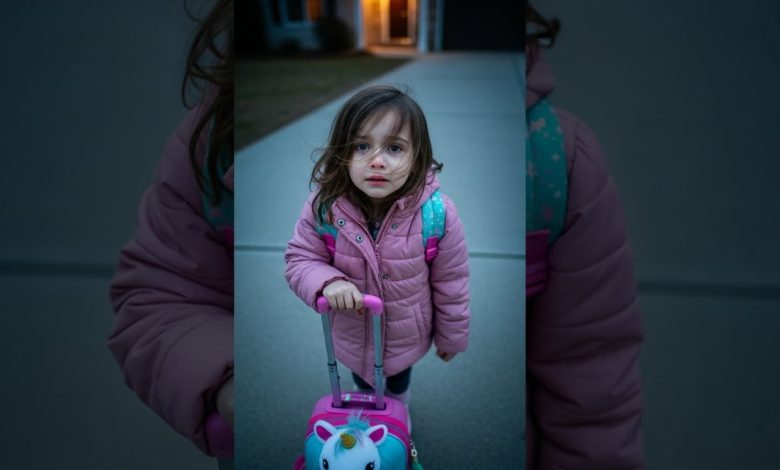
And right in the center of the driveway stood Lily. She wasn’t waving. She wasn’t running toward me. She was holding something with both hands. A small pink suitcase.
Chapter 2. The Words That Didn’t Belong to a Four-Year-Old
She was dressed like she was going on a trip. Coat zipped up. Backpack bursting at the seams. Eyes red from crying.
When I asked what she was doing, she didn’t hesitate. “I’m leaving,” she said. Not I want to leave. Not I’m mad. Leaving. I felt something cold settle in my chest.
Chapter 3. How a Child’s Imagination
Sounds Like Fear She didn’t say her mother hurt her. She didn’t say anything violent. She said something far more confusing. “I can’t live here anymore.” In my tired, overworked mind, that sentence grew teeth.
I started filling in gaps that didn’t exist.
Stress. Arguments. Missed moments. I did what a lot of parents do when panic shows up wearing love. I reacted instead of listening.
Chapter 4. The Great Escape That Wasn’t
We drove. Not far. Just enough for my thoughts to spiral. Every sentence she said sounded bigger than it was. Every detail felt heavier because it came from someone so small.
By the time we stopped, I was convinced something terrible had happened. What I didn’t understand yet was this: Children don’t explain the world the way adults do. They explain it the way it feels.
Chapter 5. The Suitcase Reveal
When we finally sat down and slowed everything to a human pace, I asked her to open the suitcase. Inside were: a few rocks she liked a half-finished bag of candy the TV remote Not survival gear.
Not clothes. Symbols. To her, folding laundry was “moving mountains.” A baby gate became “bars.” Throwing away a wrapper felt like losing treasure forever.
Chapter 6. The Moment Reality Caught Up
With Me Nothing bad had happened. Nothing dangerous. Nothing cruel. What happened was this: A tired child was asked to do a small chore. She didn’t want to.
And in her four-year-old brain, that felt like the end of the world. And I… believed the story before checking the facts.
Chapter 7. What I Learned That Night
Love can make you reckless. Not angry-reckless. Protective-reckless. The kind where you assume the worst because you’d rather be wrong than too late. But parenting isn’t about reacting to fear. It’s about translating it.
Chapter 8. Going Home Smarter Than
I Left That night ended quietly. No villains. No heroes. Just two parents laughing nervously, a child asleep, and a suitcase that would one day become a family joke. But the lesson stayed with me. Children don’t run from monsters. They run from feelings they don’t understand yet. And parents don’t need to be perfect. They just need to pause before panic takes the wheel.