She Was Blamed for a Tragedy She Didn’t Commit. What Happened Next in the Courtroom Changed Everything
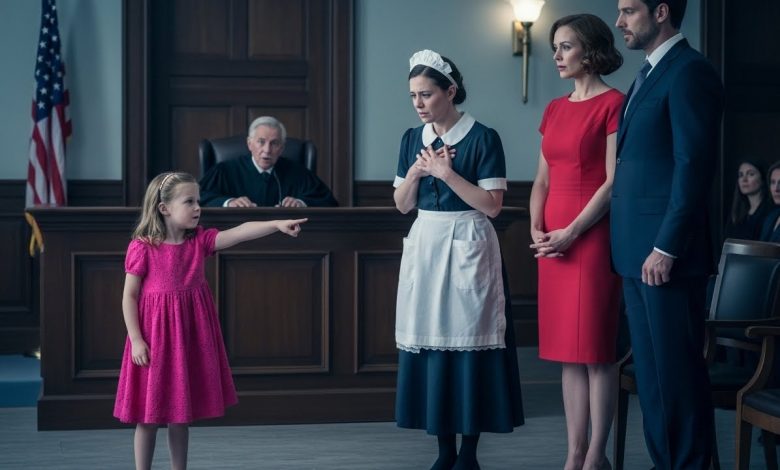
Courtrooms are supposed to be places of truth. But sometimes, they become places where silence is louder than facts. I sat in the wooden chair, hands folded tightly in my lap, listening as strangers discussed my life as if it were a puzzle they needed to solve quickly.
To them, I was a name on a document. To me, this was everything I had left. I was thirty-two years old, far from my hometown, far from the life I once imagined. For years, I had worked quietly as a caregiver, believing that kindness and consistency were enough to protect you from the worst assumptions. I was wrong. Across the room sat the woman everyone trusted.
She looked composed, confident, convincing. She spoke calmly, as if grief itself had taught her how to perform. People believed her because it was easier than questioning what they thought they understood. I didn’t look convincing. I looked tired. And in that imbalance, truth struggled to breathe.
Chapter 1. The Easy Story
When something goes wrong, people search for the simplest explanation. I was the easiest one. I wasn’t family. I didn’t have influence. I didn’t have a voice people recognized. So when loss struck the household I worked for, suspicion quietly drifted toward me.
Not because there was proof, but because there was convenience. It was easier to point at the outsider than to look inward. I tried to explain my role. I tried to explain the routines, the care, the normal days that came before everything changed. But explanations sound weak when fear has already decided.
Only one person knew the full truth. And she was eight years old.
Chapter 2. A Child Who Learned to Be Quiet
Lily had always been a quiet child. Not withdrawn, not cold. Just careful. She loved drawing animals with bright, impossible colors. She liked sitting by windows and watching the world instead of running through it.
When she was nervous, her words came slowly, as if she needed to choose them with precision. After the loss in her family, that quietness deepened. She stopped asking questions.
She stopped interrupting adults. She started listening instead. I noticed the change, but I didn’t understand it at first. I thought she was grieving in her own way. I didn’t know she was carrying something far heavier than sadness. She had seen something that didn’t make sense.
She had heard something that scared her. And she had been warned, in ways only children understand, that speaking would make everything worse. So she stayed silent.
Chapter 3. When Silence Becomes a Shield
Children don’t stay quiet because they don’t know the truth. They stay quiet because they’re afraid of what the truth will cost them. Lily believed that silence was protecting someone she loved. She believed that speaking would make things disappear forever.
And when adults are scared, children learn quickly how powerful fear can be. As the process moved forward, as people formed opinions about me, Lily watched from the sidelines.
She watched adults speak confidently about things they hadn’t seen. She watched assumptions harden into certainty. And every day, the weight of staying silent became heavier.
Chapter 4. The Moment Everything Shifted
The day they were preparing to conclude the discussion about my future, something unexpected happened.
The door opened. There was no dramatic announcement. No warning. Just the sound of hurried footsteps and a small figure standing at the edge of the room, breathing hard, eyes wide but focused. Lily had come alone.
She wasn’t supposed to be there. She hadn’t planned a speech. She hadn’t rehearsed courage. She had simply reached the moment where silence hurt more than fear. Her voice shook. Her hands trembled. But she spoke. Not with accusations. Not with anger.
With truth. She said what she had seen. She said what she remembered. She said what she had been too afraid to say before. The words didn’t come perfectly. They didn’t need to. The room changed. People stopped talking. People stopped assuming. People started listening.
Chapter 5. Listening for the First Time
Adults often underestimate how clearly children observe the world. Lily didn’t speak in dramatic language. She spoke in details. Small moments. Ordinary things that didn’t fit the story everyone had accepted. Those details mattered. Questions were asked again.
Timelines were reviewed carefully. Assumptions were finally challenged. The story people believed began to crack. Not because of arguments. But because of honesty.
Chapter 6. After the Truth Is Heard
The outcome didn’t feel triumphant. It felt quiet. Relief doesn’t arrive loudly. It settles in slowly, like air returning to a room that has been closed too long. I was no longer the center of suspicion. Lily was no longer alone with her fear. The adults involved spoke about responsibility, protection, and healing. But the real work happened in smaller moments.
Conversations without pressure. Spaces where Lily could finally feel safe to speak without consequences. She didn’t become loud overnight. She didn’t suddenly change. But she smiled more. She slept better. And she started drawing again.
Chapter 7. What Remains
People often ask what saved me. It wasn’t evidence alone. It wasn’t process alone. It was a child who reached the limit of silence. Lily didn’t speak to be brave. She spoke because love outweighed fear. And that kind of truth has a way of surviving even the darkest misunderstandings.
This isn’t a story about blame. It’s a story about listening. Because sometimes, the most important voice in the room is the one everyone underestimated.