The Boy Who Sparked a Movement: Emmett Till’s Last Days
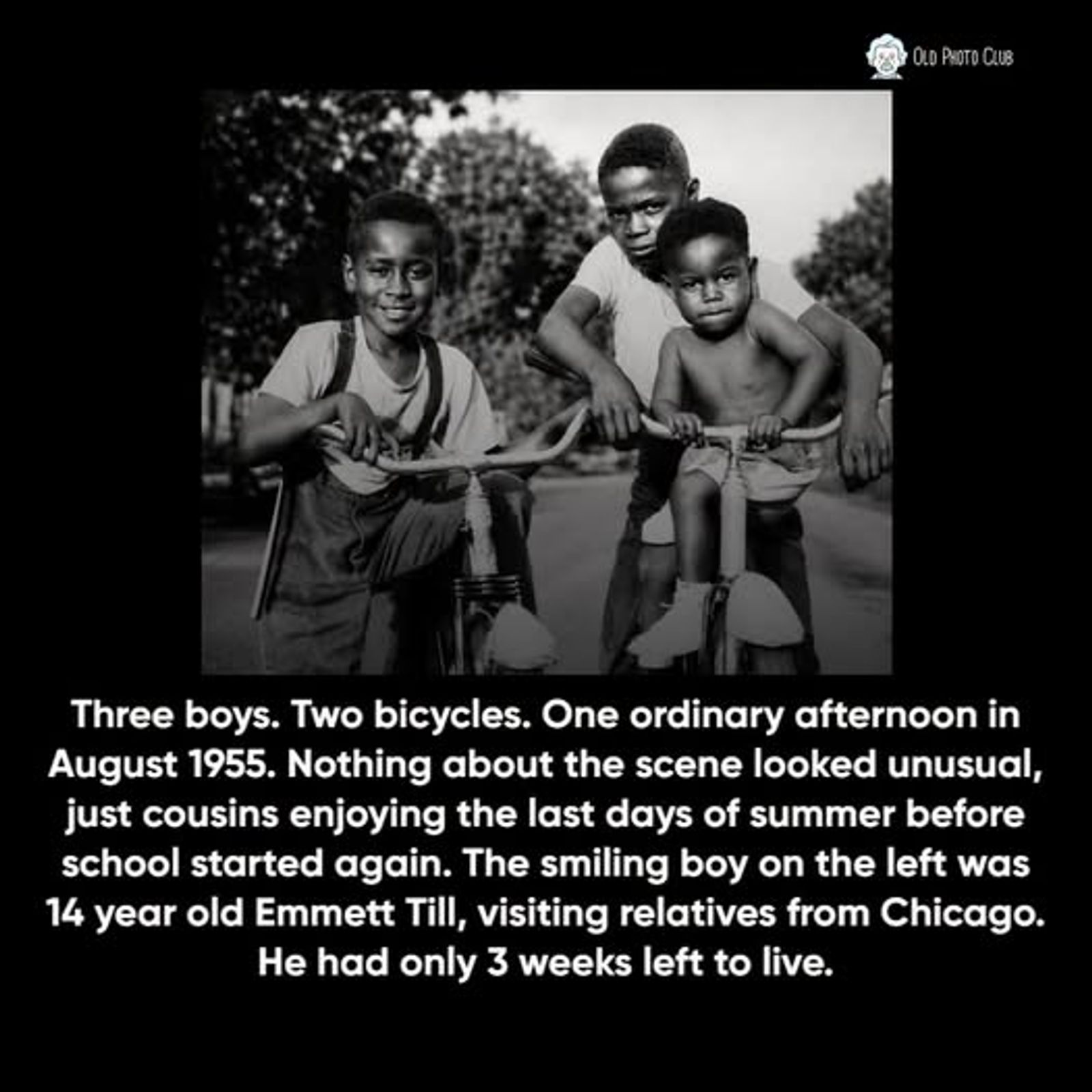
Emmett Till was just fourteen, a spirited boy born in Chicago on July 25, 1941, whose laughter echoed through his neighborhood. He was the kind of child who thrived on the joy of company, an entertainer among family and friends. Yet, to them, he was simply Emmett—a loving son, a cherished cousin, not yet a figure etched in history, nor a symbol for a movement that would change the world. His mother, Mamie Till-Mobley, often struggled to find the words to express the sorrow that enveloped her after the tragedy that befell her son. In her heart, she knew that to convey the depth of her grief, the world had to see for themselves what had been done to her boy.
By the summer of 1955, Emmett’s adventurous spirit led him to Money, Mississippi, to visit relatives, including his great-uncle Moses Wright. It was a time infused with the carefree essence of youth—bike rides with cousins, laughter in the air, and no inkling of the darkness that loomed ahead. However, the innocence of this young boy was shattered when, during a visit to a local grocery store, he was accused of offending a white woman. The incident, seemingly trivial at the time, would soon spiral into a nightmare. Four days later, in the dead of night, two men invaded the safety of his great-uncle’s home and abducted Emmett. In those harrowing moments, as his cousins Wheeler Parker and Simeon Wright watched in horror, the world turned upside down.
For Emmett’s family, the heart-stopping fear of that night marked the end of their sanctuary. Simeon later recalled the chilling sensation of helplessness, knowing that two strangers could walk into their home and take away a loved one forever. The innocence of childhood was stolen, replaced by a haunting awareness that their world would never feel safe again. Only three days after his abduction, Emmett’s lifeless body was discovered in the Tallahatchie River, a tragic culmination of hatred and ignorance.
On September 3, 1955, Mamie made a choice that would resonate through generations. In a powerful act of defiance and love, she held an open-casket funeral for her son in Chicago, allowing the world to witness the horror inflicted upon him. An estimated 50,000 mourners filed past his casket, bearing witness to the reality of racial violence. “I think everybody needed to know what had happened to Emmett Till,” she asserted, her grief transformed into a call for justice.
The images from that funeral, published in Jet magazine, shocked many Americans, especially those living outside the South, thrusting them into a confrontation with the brutal realities of racism. Just weeks later, the trial of the two men accused of his murder began, and the nation held its breath, collectively grappling with the weight of a story that was far from over.
Emmett Till’s story became a catalyst for the civil rights movement, his name etched in history not just as a tragedy, but as a clarion call for change. In remembering Emmett, we honor not only his life but also the countless lives affected by racial injustice. His laughter, his spirit, and his story continue to inspire a commitment to fight against such hatred, reminding us all of the power of a mother’s love and the importance of never forgetting.
Read more stories
- Linda Ronstadt’s “Blue Bayou” Redefined Pop-Country Crossovers and Cemented Her Legacy in 1977-2
- This Innocent Looking Boy Grew Up To Become One Of The World’s Most Evil Men
- A 22-year-old soldier crawled through jungle fire to rescue the men beside him and never m
- He was only 21, a young farm boy from Utah with no wealth, no influential supporters, and