The Song the Band Could Barely Play Together
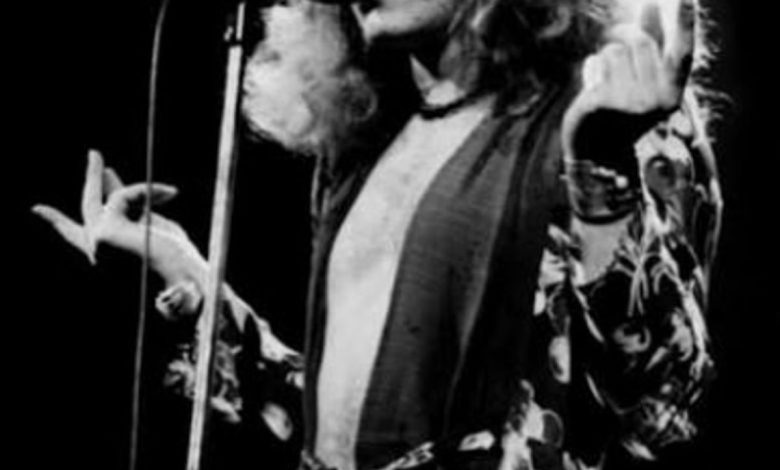
One of Led Zeppelin’s most famous riffs came from a song that initially gave the band a serious problem.
The rhythm kept shifting.
The musicians kept losing the beat.
Even John Bonham—one of the most celebrated drummers in rock history—had trouble figuring out exactly where the groove was supposed to land.
And somehow, that difficulty became part of what made the recording so extraordinary.
That song was “Black Dog.”
It became the explosive opening track of Led Zeppelin IV, an album that would become one of the most important records in rock history.
It Started With John Paul Jones
The main musical idea came from bassist John Paul Jones.
Jones had been experimenting with an unusual riff built around shifting rhythms. He wanted something that would keep moving rather than simply repeating in a predictable pattern.
He eventually brought the idea to the rest of Led Zeppelin.
The riff sounded powerful.
But there was a problem.
It wasn’t easy to play.
Jones later recalled that the original idea was in 3/16 time, and the band simply couldn’t keep up with it.
So they had to figure out how to make something incredibly complicated feel natural.
Even Bonham Had Trouble With It
John Bonham wasn’t exactly known for struggling with rhythms.
He was one of the most powerful and technically gifted drummers of his generation.
But “Black Dog” was different.
The song constantly plays with the listener’s sense of where the beat is.
The instrumental sections shift between different rhythmic patterns, creating a feeling that the song is almost pulling itself apart before snapping back together.
Bonham initially had trouble knowing exactly where to place the drums.
Eventually, Jones came up with a solution.
He told Bonham to simply keep playing four beats to the bar throughout the complicated sections.
That steady foundation allowed the rest of the band to move around the rhythm without completely losing the pulse.
And that decision became a huge part of the song’s sound.
Jimmy Page Added Another Trick
There was another challenge.
Robert Plant’s vocal lines didn’t naturally fit over Jones’s constantly shifting riff.
So Jimmy Page found a solution inspired by Fleetwood Mac’s “Oh Well.”
Instead of having Plant sing continuously over the riff, Page helped create a call-and-response structure.
Plant sings.
The instruments answer.
Plant returns.
The band answers again.
Then everything comes crashing together.
That unusual arrangement gives “Black Dog” its instantly recognizable character.
It sounds effortless now.
It wasn’t.
Where Did the Riff Come From?
Jones has described the musical inspiration in slightly different ways over the years.
At one point, he cited Muddy Waters’ Electric Mud as an influence. Later, he clarified that he had actually been thinking more about Howlin’ Wolf, particularly the repeating riff in “Smokestack Lightning.”
The idea was to create a riff that seemed as though it could keep going forever.
Instead of simply reaching the end of a phrase, it would turn around and keep moving.
That idea became one of the defining characteristics of “Black Dog.”
And once Page’s guitar entered the picture, the sound became enormous.
Then They Found the Perfect Place to Record
The song was developed during the sessions for what became Led Zeppelin IV.
The band had decided to leave the traditional studio environment behind for much of the recording.
They went to Headley Grange, an old country house in Hampshire, England.
Jimmy Page wanted somewhere isolated where the band could live, rehearse and record without worrying about neighbors complaining about the volume.
The Rolling Stones Mobile Studio was brought to the property, allowing Led Zeppelin to record directly at Headley Grange.
The unusual environment became an important part of the album’s character.
The band wasn’t simply walking into a conventional recording studio every morning.
They were living together, experimenting, writing and recording in the same place.
And “Black Dog” was one of the major results.
And Then There Was the Dog
Here’s where the song gets its strange name.
Despite what some listeners have assumed over the years, “Black Dog” isn’t about some mysterious creature or hidden story.
The title came from an actual black Labrador that wandered around Headley Grange while the band was recording.
The dog apparently came and went around the property.
The musicians fed it.
It would disappear and return.
And eventually, the band simply used the animal’s presence as the name for the track.
That’s it.
One of the most famous songs in rock history was essentially named after a dog hanging around the recording location.
Robert Plant Added the Lyrics
While Jones and Page were working out the music, Robert Plant developed the lyrics and vocal melody.
The words fit the blues-based character of the music, dealing with desire, attraction and a complicated relationship.
Plant’s voice gives the song another layer of intensity.
He begins the recording almost completely alone.
Then the instruments crash in.
The effect is dramatic.
It’s one of the reasons the opening seconds of “Black Dog” are so recognizable.
You hear Plant’s voice.
Then the band hits.
And suddenly, you’re inside the song.
The Recording Wasn’t Perfect
Interestingly, the finished recording wasn’t polished into mathematical perfection.
Some of the guitars and drums don’t line up with absolute precision during certain sections.
Modern production could easily have corrected those tiny differences.
But Led Zeppelin left much of the character intact.
The result feels human.
The band is responding to one another rather than simply playing to a rigid grid.
And that slight instability actually adds to the excitement.
The song sounds like it could fall apart.
But it never does.
It keeps coming back to the beat.
Then Came Led Zeppelin IV
“Black Dog” became the opening track of Led Zeppelin IV, released on November 8, 1971.
The album also contained “Rock and Roll,” “The Battle of Evermore,” “Stairway to Heaven,” “Misty Mountain Hop,” “Four Sticks,” “Going to California” and “When the Levee Breaks.”
It became one of the defining albums of the band’s career.
And starting the record with “Black Dog” was a statement.
After the softer opening possibilities of some of the band’s other material, Led Zeppelin came out swinging.
The first track told everyone immediately:
This band was not slowing down.
More Than 50 Years Later
“Black Dog” remains one of Led Zeppelin’s signature recordings.
But perhaps the most interesting part of its story is how difficult it was to create.
The main riff was complicated.
The rhythm confused even the musicians who were playing it.
Bonham had to find a way to anchor the drums.
Page had to build a vocal structure around the riff.
Plant had to find a melody that could live on top of all of it.
And somehow, four musicians turned all those problems into one of the most recognizable songs in rock.
Then they named it after a stray dog.
That’s the beautiful thing about Led Zeppelin.
What sounds completely natural when you hear the finished record was often the result of four musicians pushing each other into places they hadn’t been before.
The song wasn’t simple.
The rhythm wasn’t easy.
The recording wasn’t perfectly polished.
But that’s exactly why it still sounds alive.
And when that opening guitar finally crashes in after Robert Plant’s voice…
you know exactly what song you’re hearing.
Read more stories
- The Tragedy That Became a Song
- The Strange News Story That Inspired One of Rock’s Biggest Hits
- Beyond the Gilded Cage, Why Barron Trumps 18th Birthday Revelation Has Shattered Every Conspiracy Theory and Left Washington Speechless
- Doctors spot alarming health ‘marker’ in Donald Trump that could raise risk of premature death!