September 1971. Forest Hills, New York. At just sixteen years old, Chris Evert found herse

September 1971. Forest Hills, New York. At just sixteen years old, Chris Evert found herself on the opposite side of the net from Mary-Ann Eisel, who was ranked No. 4 in America, and witnessed her dreams fading away. Down a set and facing six match points, many players would have already shaken hands and exited the court. But Chris Evert was different.
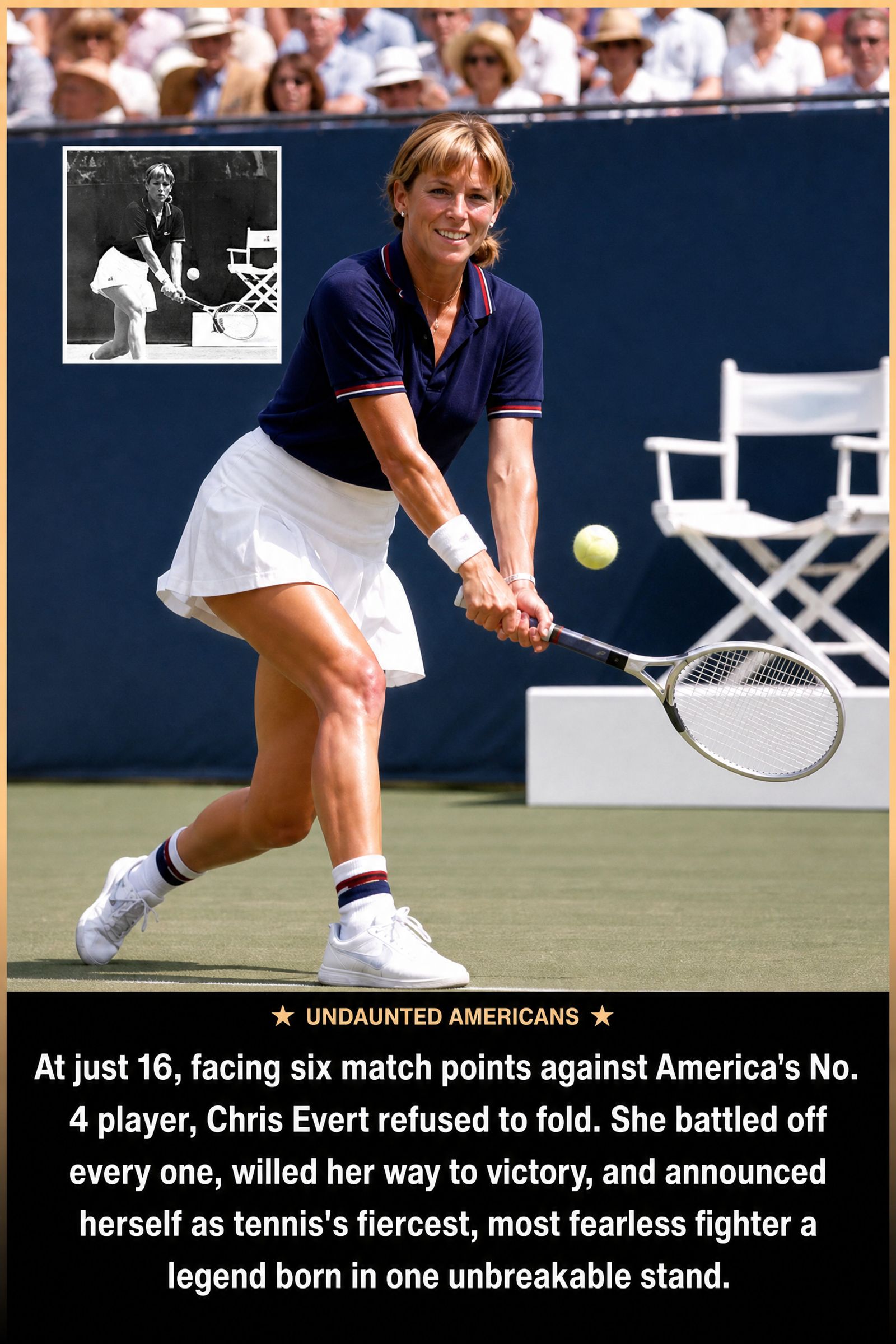
One point at a time, she fought her way back. She saved one match point. Then another. And four more after that. No panic. No wasted feelings. Just an incredible focus from a girl who should have been stressing about high school assignments, not confronting elimination on one of tennis’s grandest stages.
She emerged victorious in that match. From that unforgettable afternoon, a legend was created—the “Ice Maiden” who would capture 18 Grand Slam singles titles, dominate clay courts like no one else before or after, and redefine what mental toughness means in women’s sports for generations. Chris Evert didn’t merely play tennis; she showed America that maintaining composure under pressure is a unique form of courage.
Read more stories
- Linda Ronstadt’s “Blue Bayou” Redefined Pop-Country Crossovers and Cemented Her Legacy in 1977-2
- This Innocent Looking Boy Grew Up To Become One Of The World’s Most Evil Men
- A 22-year-old soldier crawled through jungle fire to rescue the men beside him and never m
- He was only 21, a young farm boy from Utah with no wealth, no influential supporters, and