Stepping into a Virginia courtroom wearing the Navy uniform my parents had once treated as
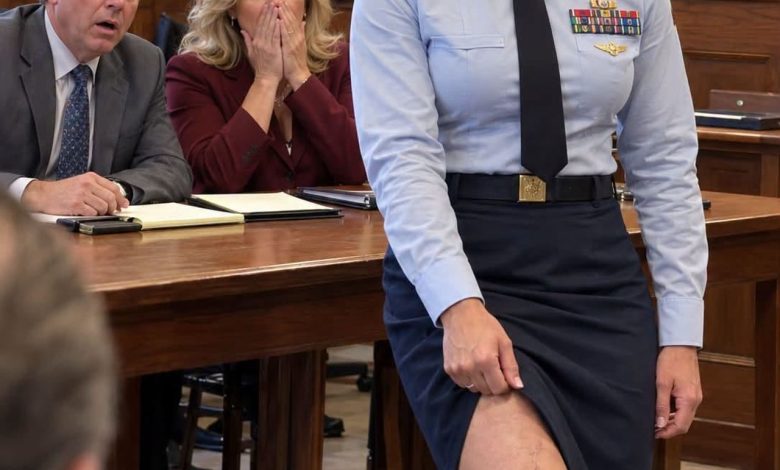
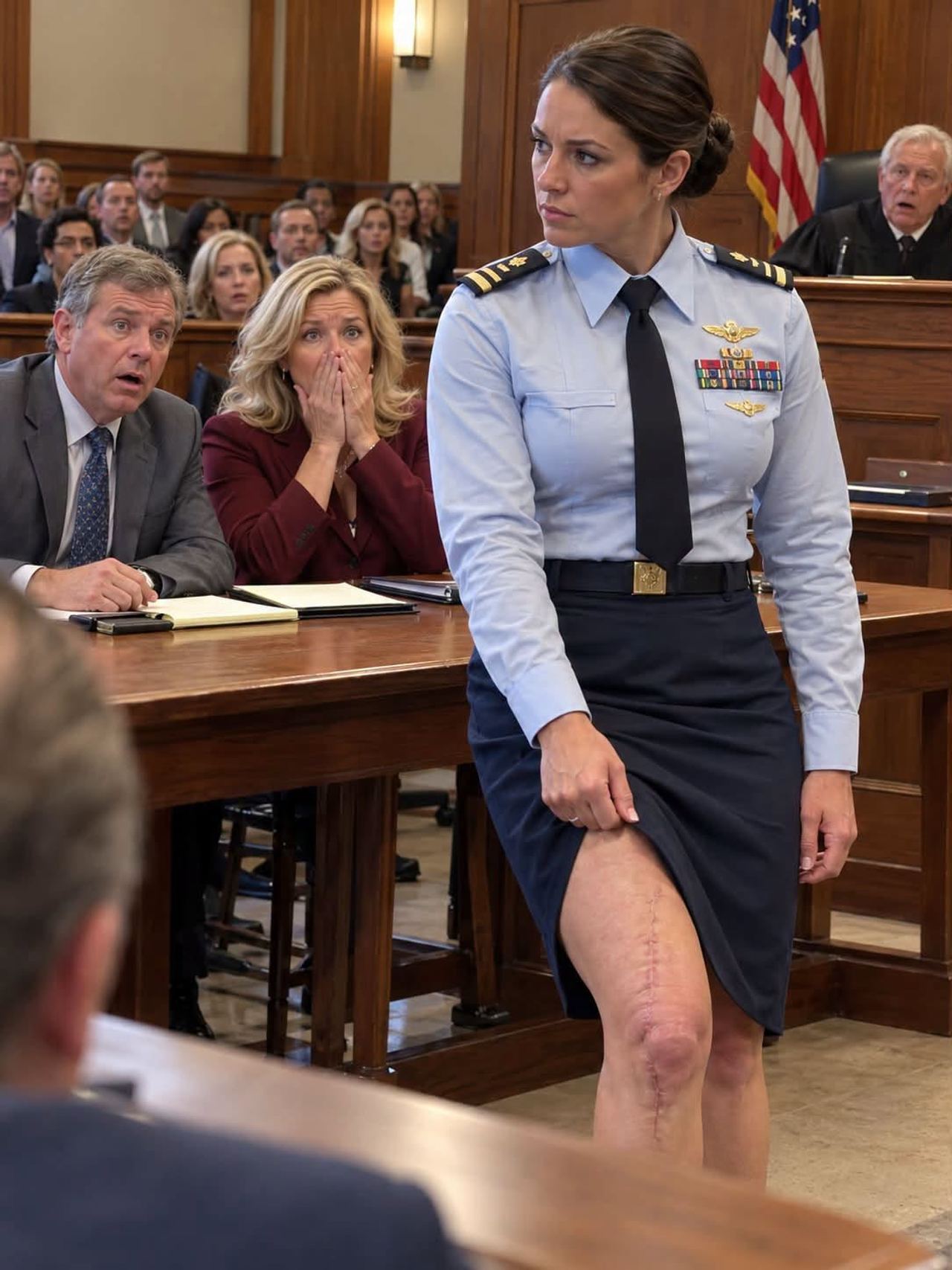
Stepping into a Virginia courtroom wearing the Navy uniform my parents had once treated as a family disgrace made the whole room go silent. My father actually chuckled when he saw me, and my mother shook her head in embarrassment—but when Judge Simmons looked at my ribbons and whispered, “My God… is that really her?” I knew my parents had come into court without understanding who their daughter had become.
Two days earlier, I had been trimming azaleas outside my little house near Norfolk when a cream-colored envelope arrived from Portsmouth Family Court.
Inside was Case 4238B.
Carter versus Carter.
Plaintiffs: Robert and Margaret Carter.
Defendant: Evelyn Carter.
My own parents were taking me to court.
I sat at my kitchen table staring at the summons while my dog, Knox, rested his heavy head on my knee.
“Well,” I murmured, scratching behind his ears, “I guess they finally found another way to talk to me.”
It had been twelve years since I had been home.
After I finished BUD/S, my father never came to see me.
My mother sent exactly one message.
“We raised a daughter, not a soldier.”
I read it once.
Then I quit waiting for their approval.
I built a life they knew almost nothing about.
I served quietly, taking responsibility for missions, logistics, and people whose lives sometimes depended on decisions I had to make in seconds.
Then an IED ripped through our convoy overseas.
I came home with a reconstructed knee, a permanent limp, scars I rarely talked about, and a pension I hardly mentioned.
My grandfather had left me his farmhouse before he died.
I had paid every property tax bill on that land since 2013, even during deployments when I was thousands of miles away.
Now my parents were claiming I had abandoned the property.
Worse, they said they had personally paid all the expenses.
I stared at the paperwork until my jaw hurt.
This wasn’t confusion.
It was a lie with a case number.
That evening, I opened the old Navy chest at the foot of my bed.
The smell of canvas, metal, and faint gun oil rose up from inside.
Beneath carefully folded clothing lay my uniform, my medals, and the flag that had belonged to my closest friend, Lewis.
Knox watched as I lifted the jacket.
“They want to see me?” I whispered.
I ran my hand over the fabric.
“Then they’re going to see who I became.”
Before court the next morning, I drove past Grandpa’s farmhouse.
The old oak tree was dying.
Paint peeled from the siding, and the porch sagged badly enough that one corner looked ready to give way.
But I could still picture my grandfather standing there with a hammer in his hand.
He built that place.
My parents didn’t.
When I dressed for court, I pinned every medal exactly where it belonged.
The jacket fit a little tighter than it used to, and my damaged knee screamed when I stood fully straight.
But the weight across my shoulders felt familiar.
Not comfortable.
Earned.
At the courthouse, conversations stopped as I walked down the hallway.
Even an elderly janitor glanced at my ribbons, stepped aside, and quietly said:
“Ma’am.”
When the clerk called Case 4238B, I walked in without an attorney.
My father looked me up and down with the same hard expression he had worn when I was a teenager.
My mother sat beside him in pearls.
Her eyes landed on my uniform.
“Uniform,” she muttered under her breath, as if the word itself embarrassed her.
Dad let out a faint chuckle.
I said nothing.
Judge Simmons entered and took his seat.
After reviewing several pages, he looked over at my father.
“Mr. Carter, you’re claiming your daughter abandoned this property?”
“Yes, sir,” Dad answered confidently. “The house has been empty for years. We’ve been paying for everything.”
Judge Simmons nodded slowly.
Then he turned to me.
“Commander Carter, would you like to make a statement?”
My father’s smile vanished.
My mother’s fingers tightened around her pearls.
I stood carefully, ignoring the sharp pain in my knee.
“Yes, Your Honor.”
But before I could say another word, Judge Simmons reached for the cream-colored case folder.
“Actually, Commander,” he said, “before you answer, there’s something in this file your parents apparently don’t know that I know.”
The courtroom went completely silent.
Judge Simmons pulled out a document.
I recognized my grandfather’s signature immediately.
Then I looked at my father.
The moment he saw that paper, every bit of color drained from his face.
Read the rest in the comments. 👇
Read more stories
- Pierce Brosnan, 73, Steps Out With Wife Keely, 63, Amid Her Dramatic Body Transformation — His Words About Her Appearance Tell Another Story
- John Rich recently called on Florida leaders to consider honoring John Anderson with the s
- After 69 years of marriage, I sat in a lawyer’s office and found out that my husband had l
- Five days after my husband’s funeral, my daughter-in-law told me to pack my bags and leave our family home. My son stood silently beside her. I simply smiled and said, “Okay.” Neither of them knew about my husband’s $28 million secret inheritance—or the mysterious brass key he’d left me.